
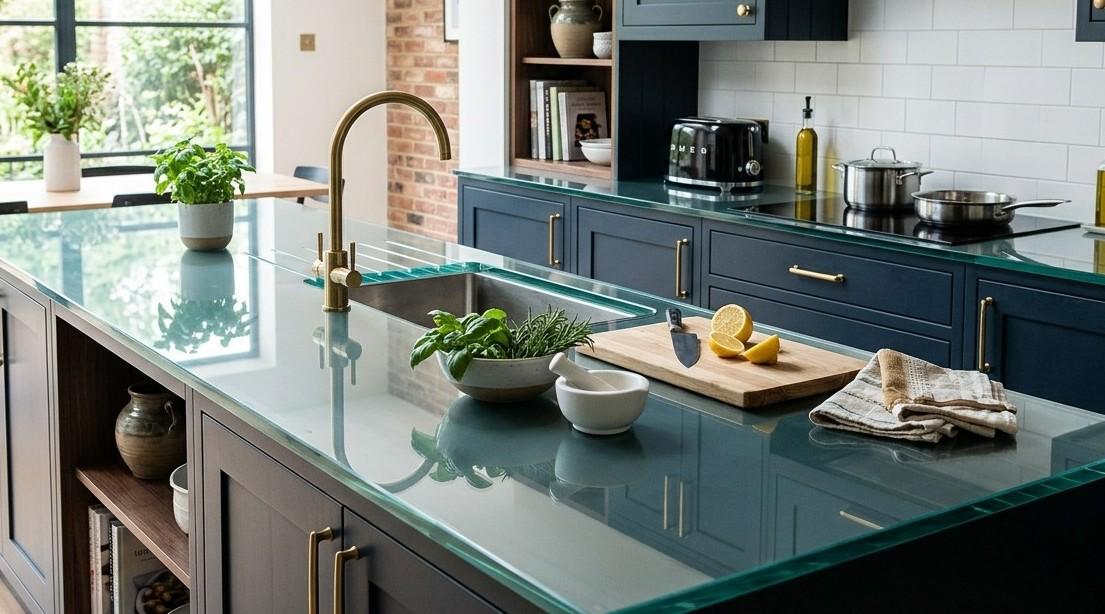
Glass worktops have moved from a niche design choice to one of the most searched-for kitchen surfaces in modern home renovations. Sleek, hygienic, and visually striking, they offer a contemporary alternative to granite, quartz, and laminate. But along with growing popularity comes a fair share of myths. This guide breaks down what glass worktops actually are, their real benefits, and the misconceptions worth clearing up before you invest.
Glass worktops are kitchen or bathroom countertops made from toughened (tempered) glass, typically 10–19mm thick. The glass is heat-treated to increase strength, then finished with a printed, painted, or coated back layer to achieve custom colours, patterns, or even photographic designs. This makes glass worktops one of the few surfaces that can be fully customised to match any interior style.
Unlike wood or natural stone, glass has no pores for bacteria, mould, or liquids to seep into. This makes glass worktops one of the most hygienic countertop options available, ideal for food preparation areas.
Toughened glass worktops can typically withstand direct heat from hot pans, often up to 400°C, and resist everyday scratches better than laminate. While no surface is completely scratch-proof, glass holds up well under normal kitchen use and rivals quartz and granite in day-to-day durability.
A simple wipe with soap and water keeps glass worktops looking new. There’s no need for sealing, polishing, or specialist worktop cleaners, which is a common maintenance requirement with natural stone.
Because the colour sits on the underside of the glass, homeowners can choose virtually any shade, printed pattern, or gradient finish. This flexibility makes glass worktops popular for both minimalist and bold kitchen designs.
Many glass worktops are made from recycled glass, making them a more sustainable choice compared to some quarried stone surfaces.
Glass surfaces reflect natural and artificial light, helping smaller kitchens feel brighter and more spacious, a subtle but valuable benefit in space-conscious homes.
A growing trend is matching glass worktops with coordinating glass splashbacks for a seamless, cohesive kitchen design. This pairing creates continuity in colour and finish that’s difficult to achieve with other worktop materials.
This is one of the biggest misconceptions. Genuine toughened glass worktops are engineered to be significantly stronger than standard glass and are designed specifically for heavy daily use. Cracking under normal kitchen activity is rare when the correct thickness and installation standards are followed.
While glossy finishes can show marks more than matte stone, most modern glass worktops come with low-maintenance or anti-smudge coatings that significantly reduce visible fingerprints and water spots.
Glass worktops sit in a similar price bracket to mid-to-high-end quartz, depending on thickness, finish, and customisation. They are not necessarily more expensive than premium stone options and often work out competitive when factoring in low long-term maintenance costs.
Thanks to printed and coloured finishes, glass worktops can be tailored to suit traditional, industrial, or transitional kitchen styles, not just minimalist or contemporary spaces.
When properly installed, glass worktops are highly durable and resistant to staining, fading, and heat damage, often outlasting laminate and some engineered stone products in terms of surface integrity.
One genuine consideration is that chips or cracks in glass worktops are harder to repair invisibly compared to stone. If damage does occur on an unsupported edge or corner, replacement of the affected panel is sometimes the only option, so professional installation and proper support are essential.
| Feature | Glass Worktops | Quartz | Granite | Laminate |
|---|---|---|---|---|
| Hygiene | Excellent | Good | Good | Fair |
| Heat Resistance | High | Moderate–High | High | Low |
| Customisation | Very High | Moderate | Low | Moderate |
| Maintenance | Low | Low | Moderate | Low |
| Sustainability | High (recycled glass) | Moderate | Low | Moderate |
12mm–19mm is standard for kitchen use; thicker glass offers greater impact resistance.
Matte finishes hide fingerprints better than high-gloss options.
Polished, bevelled, or pencil edges affect both safety and aesthetics.
Always use a certified installer, as precise templating is essential for toughened glass.
Glass worktops combine hygiene, durability, and design versatility in a way few other surfaces can match. While misconceptions around fragility and cost persist, modern toughened glass technology has addressed most of these concerns. For homeowners looking for a customisable, low-maintenance, and hygienic kitchen surface, glass worktops are well worth serious consideration.
Ready to upgrade your kitchen? Get in touch with Murtaza Glass today for a free consultation on bespoke glass worktops built to your space and style.

October 22, 2026

October 14, 2026

October 12, 2026
September 30, 2026
September 24, 2026
 +971 58 543 0631
