
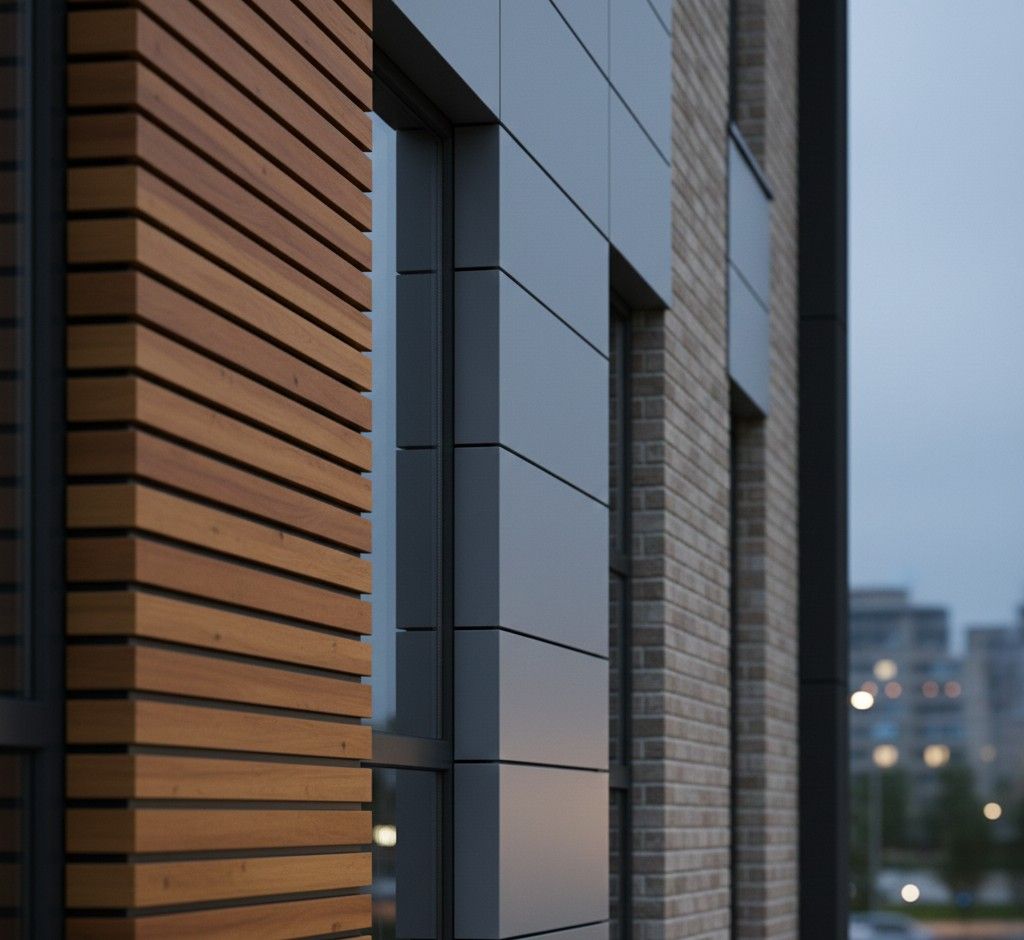
Cladding in construction refers to the application of one material over another to provide protection, insulation, and aesthetic appeal to a building. It is an essential component in modern architecture, enhancing building performance while offering design flexibility.
Understanding the types, benefits, and uses of cladding is crucial for builders, architects, and project managers aiming for durability and efficiency.
Cladding acts as the first line of defense against environmental factors such as rain, wind, heat, and UV radiation. It improves thermal efficiency, reduces maintenance costs, and contributes to fire safety. For commercial and residential projects, selecting the right cladding material can influence both operational costs and property value.
Cladding provides multiple advantages including protection from weather, improved insulation, noise reduction, and extended building lifespan. It also allows for creative design possibilities that elevate the aesthetic value of a structure.
Cladding serves as a barrier against rain, wind, and UV rays, protecting the underlying structure from damage.
Cladding improves thermal performance, reducing heating and cooling costs for residential and commercial buildings.
Certain cladding materials, such as timber and composite panels, provide sound insulation, improving indoor comfort.
Cladding allows architects to experiment with textures, colors, and designs, enhancing the overall visual appeal of a building.
High-quality cladding materials extend the building’s lifespan and reduce the frequency of repairs.
Cladding materials vary in composition, performance, and application. Selecting the right material depends on building type, climate, budget, and design goals.
Metal cladding includes aluminum, steel, and copper panels. It is highly durable, resistant to fire and corrosion, and suitable for industrial and commercial buildings.
Key features:
Common uses:
Timber cladding provides a natural aesthetic and can be used for both interior and exterior applications. It requires proper treatment to resist moisture, insects, and UV damage.
Key features:
Common uses:
Composite cladding combines materials such as wood and plastic or metal and resin. It offers durability and low maintenance with a wide range of design options.
Key features:
Common uses:
Stone and brick cladding provide a timeless appearance and excellent structural protection. They are heavy but highly durable and suitable for high-end constructions.
Key features:
Common uses:
PVC cladding is lightweight, water-resistant, and cost-effective. It is ideal for residential and commercial projects where low maintenance is critical.
Key features:
Common uses:
Selecting cladding involves evaluating multiple criteria. Buyers should consider the following:
| Evaluation Criteria | Considerations | Buyer Guidance |
|---|---|---|
| Durability | Material lifespan and weather resistance | Choose metal or composite for longevity |
| Maintenance | Cleaning frequency and repair needs | Timber and PVC need periodic treatment |
| Thermal Performance | Insulation value (R-value) | Stone and timber offer natural insulation |
| Fire Safety | Fire rating and compliance | Metal and stone cladding are highly fire-resistant |
| Aesthetics | Color, texture, and finish options | Composite materials offer customizable design |
| Cost | Material, installation, and lifecycle cost | PVC and vinyl are cost-effective; stone is premium |
| Supplier Support | Warranty, technical guidance, installation support | Prioritize suppliers with proven experience and certifications |
Cladding is versatile and finds applications in multiple sectors:
Architects and builders often combine multiple cladding materials to achieve both functional and aesthetic goals. For long-lasting and elegant exterior finishes, consider durable and stylish cladding solutions from certified suppliers with professional installation support. Supplier guidance is critical to ensure material compatibility and long-term performance.
Cladding is a protective or decorative layer applied to a building’s exterior. Common types include metal, timber, composite, stone, brick, PVC, and vinyl.
Cladding enhances weather protection, fire safety, insulation, and aesthetics. It also reduces maintenance costs and extends building lifespan.
Cladding is used to protect structures from weather, improve energy efficiency, and enhance visual appeal. It is applied in residential, commercial, and industrial buildings.
The 4 D’s refer to Durability, Design, Delivery, and Dependability. These guide selection to ensure performance, aesthetics, and supplier reliability.
Cladding is an essential element in modern construction, providing protection, insulation, and aesthetic appeal. Choosing the right material, considering durability, fire safety, and supplier support ensures long-term performance and efficiency. Proper installation and maintenance further extend lifespan and enhance building value.
For professional guidance on selecting, installing, or maintaining metal, timber, composite, stone, or PVC cladding across the UAE, Murtaza Glass & Frames Trd. L.L.C offers expert advice, certified materials, and reliable installation services.
Contact our cladding experts today to ensure your project achieves both safety and visual excellence.
Discover professional guides on glass solutions, from doors and partitions to balustrades and windows, helping you choose the perfect style for your home or business.
April 2, 2026
March 27, 2026
March 18, 2026
March 13, 2026

March 3, 2026
 +971 58 543 0631
