
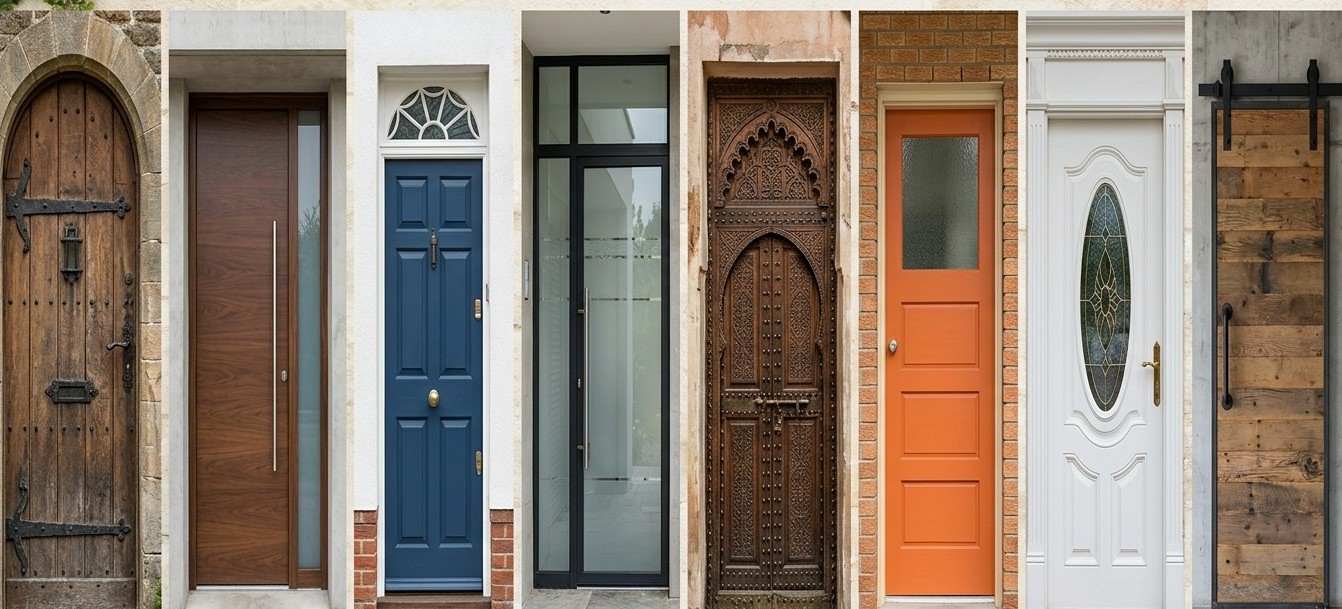
Choosing the right door is one of those decisions that seems simple until you actually start looking. Walk into any hardware store or scroll through a few home design pages, and you’ll find dozens of materials, styles, and mechanisms, each promising to be the “best” option. The truth is, the right door depends entirely on where it’s going and what you need it to do.
This guide breaks down the main door design types and styles in plain language, so you can figure out what actually fits your space, whether it’s a home, office, or commercial property.
A door isn’t just an opening you walk through. It affects privacy, natural light, energy efficiency, noise levels, and even how spacious a room feels. A poorly chosen door can make a small room feel cramped or let heat escape all winter. A well-chosen one can quietly solve problems you didn’t even know you had.
That’s why understanding the basic categories of door design is worth the ten minutes it takes to read this guide.
Sliding doors move horizontally along a track instead of swinging open on hinges. They’re a popular choice for balconies, patios, and rooms where floor space is limited, since they don’t need clearance to open.
Best for: Balconies, terraces, small apartments, modern homes Why people choose them: They save space, let in more natural light, and give a clean, contemporary look. Glass sliding doors in particular are popular right now because they blur the line between indoor and outdoor spaces.
Folding doors (sometimes called bi-fold or accordion doors) are made of multiple panels connected by hinges that fold neatly to one side when opened. Designer folding doors with slim sliding systems have become especially popular because the frames are thinner, letting in more light while still being sturdy.
Best for: Restaurants, cafes, open-plan living rooms, spaces that need a wide, unobstructed opening Why people choose them: They can open up an entire wall, which is great for connecting indoor and outdoor seating areas or creating flexible room layouts.
Aluminium doors have become one of the most requested options for both homes and offices, and for good reason. They’re lightweight, resistant to rust, and don’t warp with humidity or temperature changes the way wood can.
Best for: Modern homes, offices, humid or coastal climates Why people choose them: Low maintenance, long lifespan, and a sleek, minimal look that pairs well with glass. Aluminium framing is also commonly used to support large glass panels safely.
Glass partitions aren’t traditional doors in the classic sense, but they play a similar role in dividing spaces while keeping them visually open. They’re widely used in offices to separate meeting rooms or private cabins without making the space feel closed off.
Best for: Offices, showrooms, modern homes with open layouts Why people choose them: They maintain natural light flow and a sense of openness, while still offering sound separation and privacy when frosted or tinted glass is used.
A vision panel is a section of glass built into a solid door, usually used where visibility and safety matter, such as fire exits, hospital corridors, or office doors. They combine the security of a solid door with the visibility of glass.
Best for: Offices, schools, hospitals, fire-rated exits Why people choose them: They improve safety by letting people see what’s on the other side before opening the door, which is especially important in busy or emergency-prone areas.
Wooden doors remain a classic choice, especially for main entrances and interior rooms where a warmer, traditional look is preferred. They offer good insulation and a timeless aesthetic, though they generally need more maintenance than aluminium or glass.
Best for: Traditional homes, main entrances, bedrooms Why people choose them: Natural warmth, customizability, and a sense of solidity that many homeowners still prefer for front doors.
There’s no single “best” door design, only the one that fits your specific needs. A few quick questions can help narrow it down:
Aluminium doors are generally the most durable for long-term use since they resist rust, warping, and weather damage better than wood.
Yes, when paired with frosted, tinted, or reflective glass. Clear glass partitions are best combined with films or blinds where full privacy is needed.
Sliding doors are the most space-efficient option since they don’t require swing clearance.
Yes, folding doors are increasingly used in offices and commercial spaces to create flexible, open layouts that can be closed off when needed.
Door design isn’t just about appearance, it’s about matching the right material and mechanism to the way a space is actually used. Whether you’re renovating a home, setting up an office, or designing a commercial space from scratch, starting with the basics covered here will help you make a decision you won’t need to second-guess later.
If you are planning a renovation or new build, it’s worth speaking to a specialist who can walk you through material samples and mechanisms in person, since photos and descriptions only tell half the story.
For expert guidance and quality installations, Murtaza Glass & Frames Trd L.L.C, one of the top door suppliers in UAE, can help you find the right door design for your space.

October 22, 2026

October 14, 2026

October 12, 2026
September 30, 2026

September 24, 2026
 +971 58 543 0631
