

Small rooms rarely suffer from a lack of square footage alone. They suffer from blocked light, chopped-up sightlines, and doors that swing into usable space. Glass doors for small spaces address all three problems at once.
This is especially true in UAE apartments and compact villas, where every square meter counts. This guide covers which door styles fit tight layouts, how to pick the right glass for local conditions, and a simple framework for avoiding costly mistakes.
Glass doors make small spaces feel bigger because they let light and sightlines pass through a boundary that would otherwise block them. The eye reads the room beyond the door as part of the current room. That visual continuity makes a compact apartment or office feel noticeably more open.
Solid doors create hard visual stops, and every stop shortens perceived depth. Glass removes the stop while still separating noise, airflow, and function. A home office can stay distinct from a living area without becoming a dark box.
Natural light also reaches interior rooms with no windows of their own. Hallways, bathrooms, and storage nooks benefit most from this borrowed daylight.

The best glass doors for small spaces are sliding, pocket, and pivot designs because they avoid the swing arc of a standard hinged door. A sliding or pocket door can recover 8 to 10 square feet of floor area per opening. That is often enough for a desk or shelf.
Sliding glass doors run on a top or bottom track and stay flat against the wall. They suit wide openings such as balcony access or room dividers. Choose a soft-close mechanism to prevent slamming and glass stress.
Pocket doors disappear into the wall cavity when open. They give the cleanest result but need wall depth and careful framing. Retrofits cost more, so plan them during renovation.
Pivot doors rotate on a central or offset hinge and work well in entryways with limited depth. Designer folding doors fold in sections and suit closets or wide kitchen openings. Check the stack width before you order.
For openings that need exact sizing, glass sliding doors in UAE can be measured, fabricated, and installed to suit your layout. Murtaza Glass also supplies slim-frame systems for a lighter look.
Choose the glass finish based on how much privacy the room needs, then match the frame to the visual weight the room can carry. Clear glass maximizes light and depth. Frosted or reeded glass diffuses light and hides clutter while still brightening the space.
| Finish | Light Transfer | Privacy | Best Use |
|---|---|---|---|
| Clear | Highest | Low | Living areas, balconies |
| Frosted | High | Medium-High | Bathrooms, bedrooms |
| Reeded/Fluted | Medium-High | Medium | Home offices, kitchens |
| Tinted | Medium | Medium | Sun-exposed rooms |
Thin black steel-look frames add structure without bulk. Frameless systems look the cleanest but need precise installation. Wood frames warm a space but add visual weight in very narrow rooms.
Always specify tempered or laminated safety glass. Widely used benchmarks for safety glazing, such as 16 CFR Part 1201, are a useful reference. Your installer should confirm compliance with UAE and local building requirements for every door location.
Free Resource: Find the Right Glass Finish
Not sure which finish fits your layout? Review our glass partitions range for sample configurations, or message the team on WhatsApp for advice.
The most effective tricks align glass doors with existing light sources, keep both sides of the door visually consistent, and limit clutter near the opening. These moves extend sightlines and let daylight travel deeper. Color, lighting, and furniture placement matter as much as the glass itself.
Run the Light-Flow-Clearance (LFC) Check before you finalize any layout:
If a design fails any of the three, adjust the placement before you order.

The main trade-offs of glass doors for small spaces are reduced privacy, more frequent cleaning, weaker sound control, and heat transfer. Each risk is manageable with the right specification. Ignoring them is what leads to regret after installation.
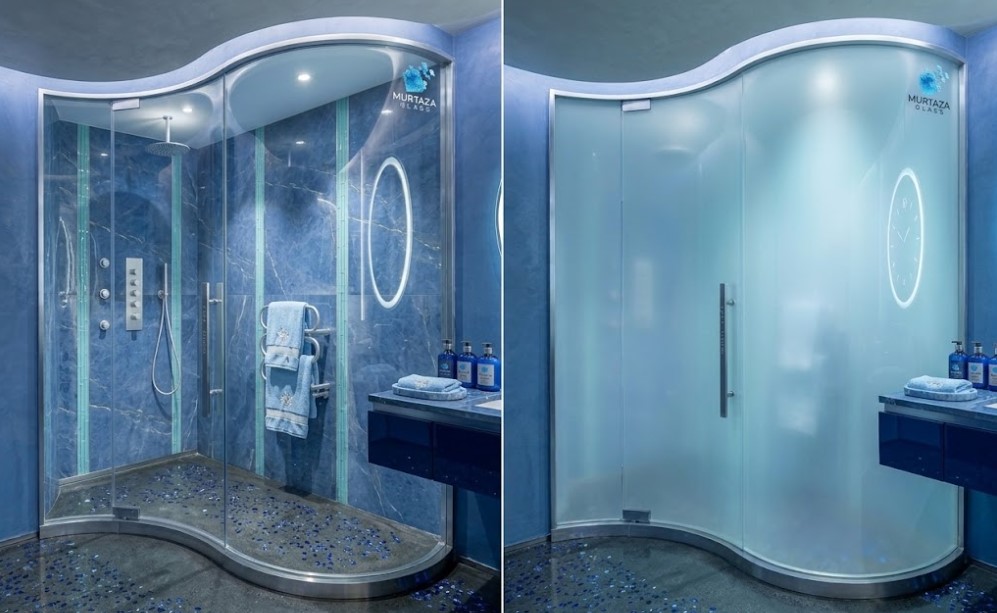
Privacy: Frosted, reeded, or smart film switchable glass solves this without giving up light. Test samples in the actual room first.
Maintenance: Fingerprints and track debris show up fast. Choose low-iron or coated glass and vacuum bottom tracks monthly.
Acoustics: Single-pane glass transmits more noise than solid wood. Laminated or double-glazed units improve sound reduction.
Thermal performance: In UAE climate, sun-facing doors need reflective or tinted glass to control heat gain. The U.S. Department of Energy explains how window and door efficiency ratings work, which helps you compare U-factor and solar heat gain.
Hardware quality matters too. A premium track system costs more upfront but prevents the sticking and misalignment that frustrate owners within a year or two.

Glass doors for small spaces work because they solve a layout problem and a light problem together. Pick a space-saving door type, match the finish to your privacy needs, and run the LFC Check before you buy. Done well, the room feels larger without moving a single wall.
Ready to plan your space?
Murtaza Glass can review your floor plan, recommend door types and glass specs, and provide a measured quote across Sharjah, Dubai and Ajman.
Yes. Glass doors extend sightlines and let light pass between rooms, which creates a stronger sense of depth. The effect is strongest when floor materials and wall colors stay consistent on both sides of the opening.
Yes, when made from tempered or laminated safety glass that meets local glazing codes. Add decals or frosted bands at eye level to prevent collisions, and choose soft-close hardware to protect fingers.
Sliding or pocket glass doors are usually the best choice because they eliminate the swing arc and free up floor space. Frosted or reeded glass adds privacy for bedrooms and bathrooms without blocking light.
October 22, 2026

October 14, 2026

October 12, 2026
September 30, 2026

September 24, 2026
 +971 58 543 0631

